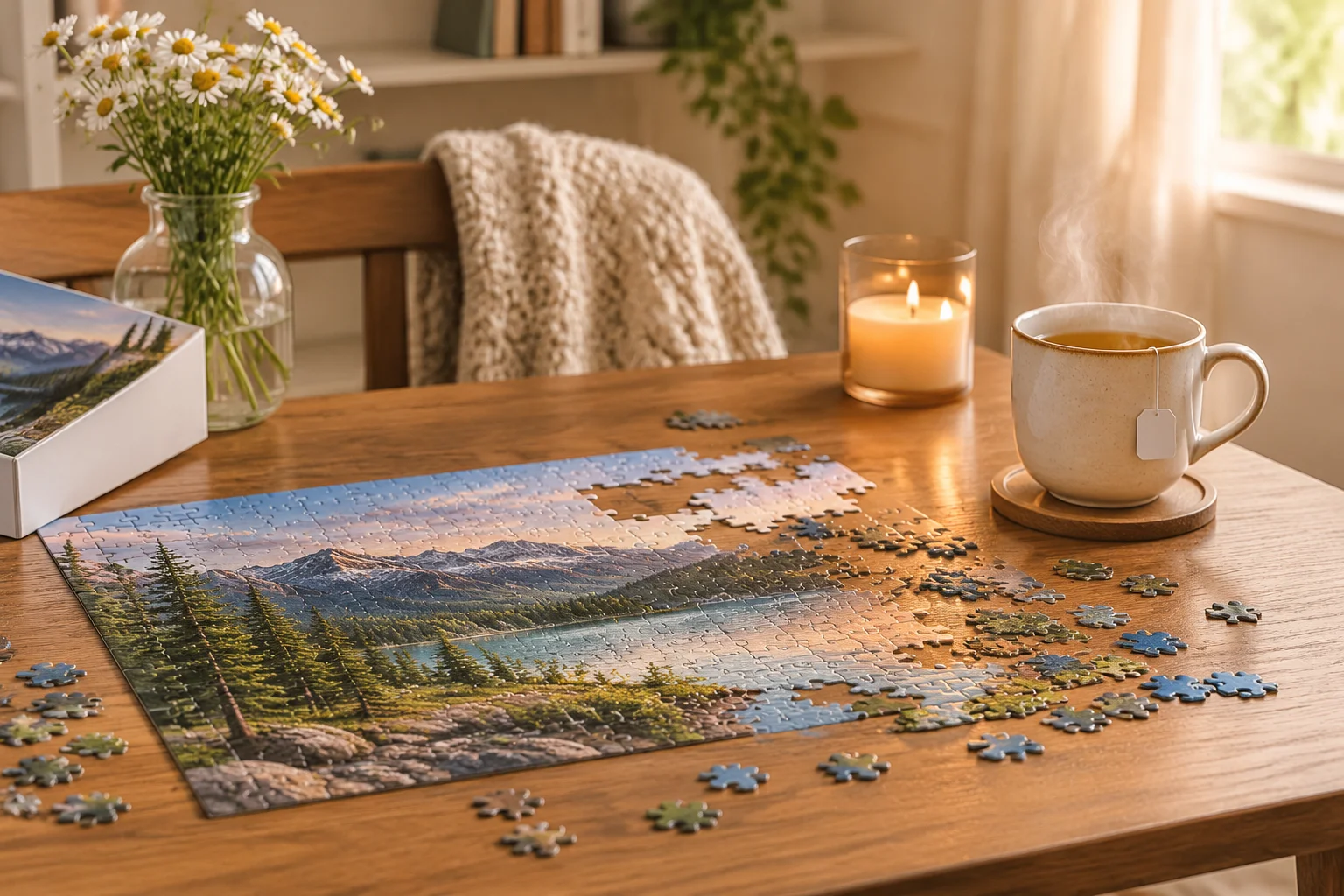
The Calming Science of Tactile Problem Solving
Modern schedules flood human attention with endless notifications and split-second decisions. Sitting down before a scattered jigsaw puzzle offers an immediate physical pause, trading rapid cognitive shifts for patient, tangible assembly.
Unlike passive relaxation techniques where internal thoughts often wander back toward workday stressors, puzzling requires hands-on involvement. Manipulating textured wooden corners and analyzing gradient shifts absorbs visual attention completely. The mind enters what psychologists term passive concentration, a gentle focus where anxious loops diminish without forced mental resistance.
When you pick up a puzzle piece, you are not simply solving an image; you are anchoring your consciousness in the present physical moment.
— David Lin, Craft & Mindfulness Lead
Practical Routines for Mindful Puzzling
Transforming a quick puzzle session into a restorative wellness ritual depends on pacing and atmosphere rather than assembly speed:
- Establish a screen-free space with soft ambient lighting and an uncluttered surface to protect your posture.
- Begin with methodical color grouping, focusing solely on the tactile feel of smooth wooden tiles in your fingers.
- Incorporate slow, steady breathing cycles whenever searching for intricate edge or corner connections.
- Set a dedicated timer for twenty to thirty minutes, stepping away without pressure to complete the entire board.
Long-Term Benefits for Cognitive Wellness
Regular puzzling nurtures cognitive resilience by training the brain to approach complex challenges through manageable increments. As you sort through hundreds of fragments, the brain practices patient deduction, improving visual spatial reasoning while lowering cortisol spikes associated with fast-paced multitasking.
Over weeks of gentle practice, this tranquil tactile exercise builds lasting mindfulness habits. Puzzlers report deeper sleep patterns, enhanced concentration during workday projects, and a grounded sense of calm that carries far beyond the assembling table.

Community Reflections
No comments yet. This could be your first comment!
Leave a Comment
Share your thoughts, experiences, or questions about this assembly guide.